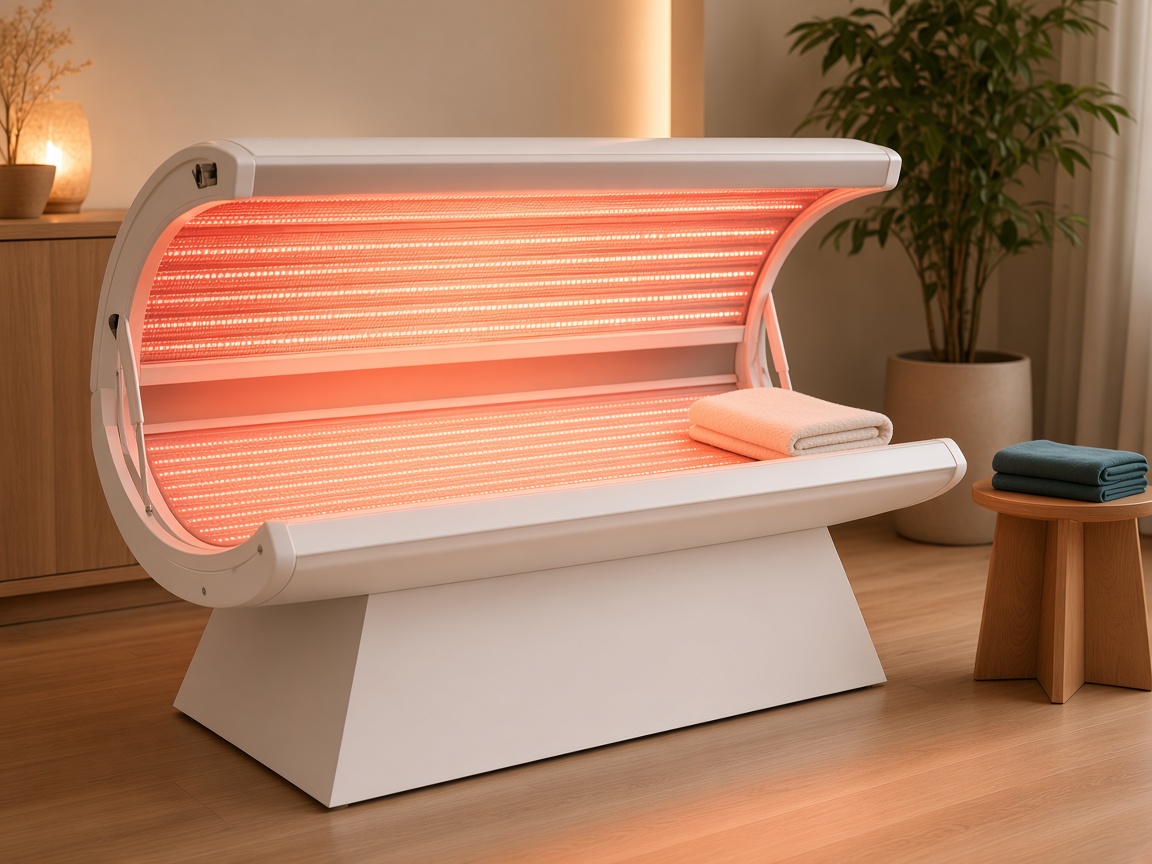
Photobiomodulation, also called low-level light therapy or red light therapy, is a noninvasive treatment that uses visible red light (660) and near-infrared light (about 850) and blue light (450nm) from LEDs or low-power lasers. The dose is kept low enough that tissue is not heated. Light is absorbed by cell pigments, mainly cytochrome c oxidase in mitochondria. That can raise cellular energy (ATP), shift nitric oxide and reactive oxygen signaling, and change gene activity involved in repair and inflammation.
A 2025 umbrella review of randomized clinical trials found that photobiomodulation produced meaningful benefits for some outcomes, with moderate-certainty evidence in selected conditions such as knee-osteoarthritis disability, fibromyalgia-related fatigue, androgenetic alopecia hair density and several other targeted applications. For many other outcomes, evidence remains low or very low certainty.
Red and near-infrared light can be absorbed by light-sensitive molecules in cells and may influence mitochondrial activity, blood flow, inflammatory signalling and other processes involved in tissue function and recovery. The response is dose-dependent: more light is not automatically better.
Treatment is non-invasive and typically involves exposing the target area to a red and/or near-infrared light source for a defined period. The light should feel comfortable rather than painfully hot. Eye protection may be used depending on the device and treatment area.
Red light therapy is best presented as a condition-specific adjunct, not a universal cure. The clinic can help determine whether the available device and protocol are a reasonable fit for your goals.
10% off with prepaid pack of 10 sessions