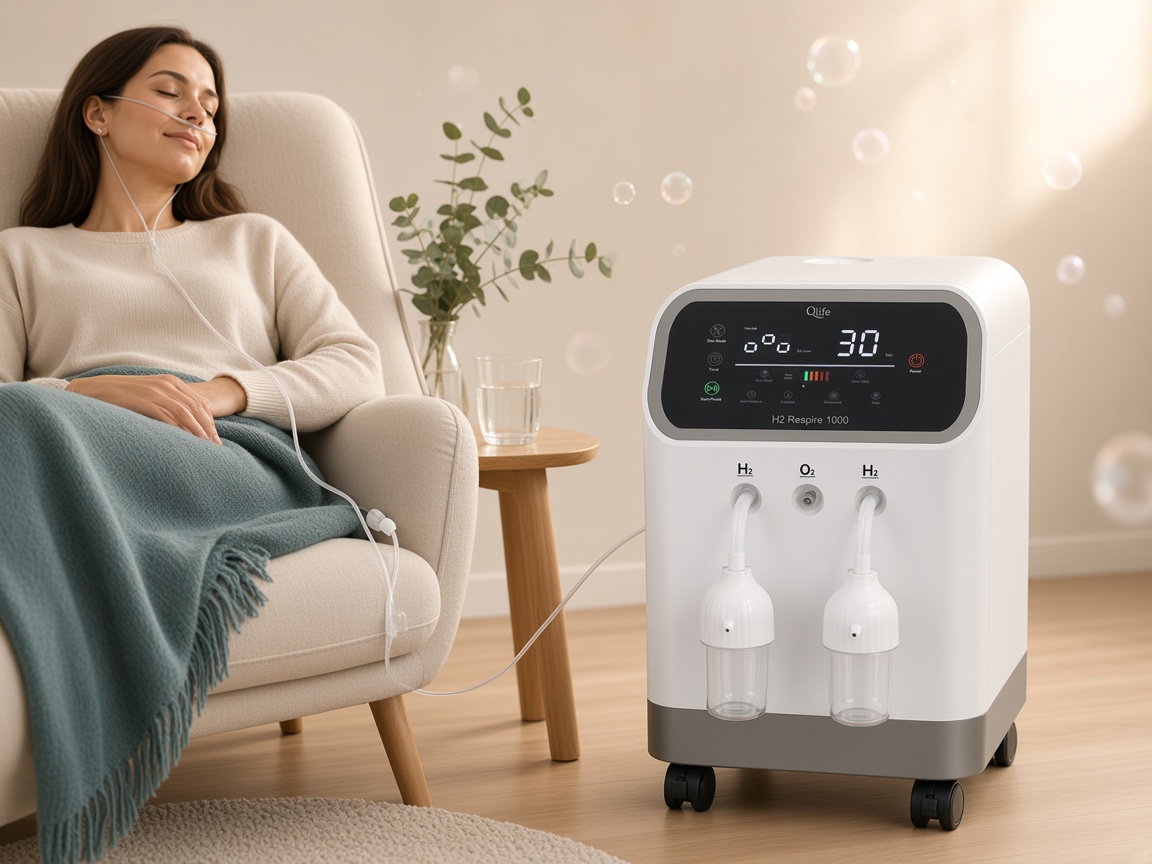
Oceanside Hyperbaric uses an electrolysis system to generate molecular hydrogen (H₂), which is then breathed during a treatment session. Inhalation allows hydrogen to enter the lungs and diffuse rapidly into the bloodstream and tissues, where researchers are studying its effects on oxidative stress, inflammatory signalling and cellular stress responses.
Molecular hydrogen therapy is an emerging field rather than an established treatment for a broad range of diseases. Human studies have produced some encouraging findings, but protocols, concentrations, treatment times and delivery systems vary considerably. We therefore offer hydrogen inhalation as a complementary wellness and recovery therapy, with expectations grounded in the current evidence rather than broad curative claims.
During a session, an electrolysis machine generates molecular hydrogen for inhalation. Unlike hydrogen-rich water, this method delivers H₂ directly through the respiratory system. Hydrogen is a very small molecule and can diffuse quickly through biological tissues, which is one reason it has attracted interest in medical research.
Human research has investigated inhaled molecular hydrogen in areas including exercise performance and recovery, fatigue, oxidative stress, neurological and cardiovascular conditions, respiratory illness and other inflammatory or metabolic conditions. Some controlled studies have reported measurable biological or clinical effects, while others remain preliminary. Reviews consistently note that larger studies and standardized treatment protocols are still needed.
Hydrogen is often described as an antioxidant, but current research suggests its effects may also involve redox signalling, inflammatory pathways and cellular stress responses. These mechanisms are still being worked out, and a biological effect does not by itself establish that hydrogen will improve a particular medical condition.
Treatment is non-invasive: you simply breathe the hydrogen-containing gas produced by the clinic’s electrolysis system for the prescribed session time. The clinic will review the treatment process and any relevant screening considerations before your session.
Molecular hydrogen therapy is best considered an adjunct to appropriate medical care, not a replacement for diagnosis or established treatment. If you are receiving care for a significant health condition, keep your treating health-care team informed about complementary therapies you are using.
10% off with prepaid pack of 10 sessions