Hyperbaric oxygen therapy (HBOT) combines increased atmospheric pressure with breathing 100% oxygen. Under pressure, much more oxygen can dissolve into the liquid portion of the blood, allowing oxygen to reach tissues at concentrations that cannot be achieved by breathing oxygen at normal pressure.
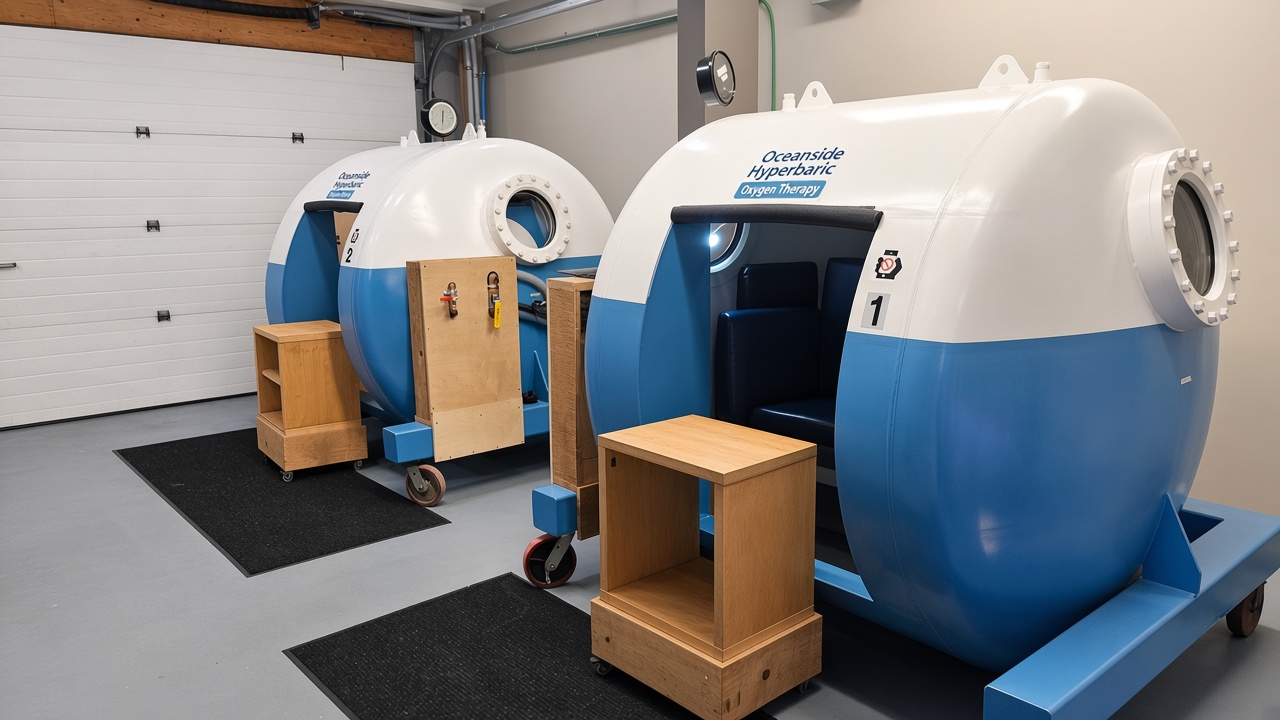
Oceanside Hyperbaric uses two-person, hard-shell multiplace chambers. The chamber itself is pressurized with air while clients breathe 100% oxygen through a lightweight mask or hood. The clinic’s system is designed for treatments up to 2.0 ATA, with one- and two-person sessions available.
As the chamber pressurizes, the most noticeable sensation is usually pressure in the ears, similar to descending in an airplane or driving down a mountain. Staff will show you how to equalize comfortably. Once at treatment pressure, you remain seated and breathe oxygen through your mask or hood while the chamber is monitored.
HBOT is an established medical therapy for a defined group of conditions, including decompression sickness, carbon-monoxide poisoning, selected problem wounds, radiation tissue injury, refractory osteomyelitis, compromised grafts and flaps, and several other indications recognized by the Undersea and Hyperbaric Medical Society. Research also continues into neurological and inflammatory conditions, recovery after injury or exertion, exercise performance, healthy aging and other applications. Evidence varies substantially between these uses, so we distinguish emerging research from established medical indications.
Breathing oxygen alone is not the same as HBOT. The increase in ambient pressure is what allows substantially more oxygen to dissolve into plasma and other body fluids. Depending on the condition being treated, this can support oxygen delivery to hypoxic tissue and can influence processes involved in edema, inflammation, infection control and tissue repair. Those same oxygen-dependent and signalling effects are also part of why HBOT is being studied in recovery, adaptation and human performance.
HBOT is generally well tolerated, but it is still a medical treatment with real contraindications and side effects. Ear or sinus pressure injury is the most common concern; temporary vision changes can occur during longer treatment courses, and oxygen-related seizures are rare. Fire safety is especially important in hyperbaric environments. Every client should be screened before treatment, and emergency conditions such as carbon-monoxide poisoning or decompression illness require hospital-level care rather than a private outpatient clinic.
10% off with prepaid pack of 10 sessions